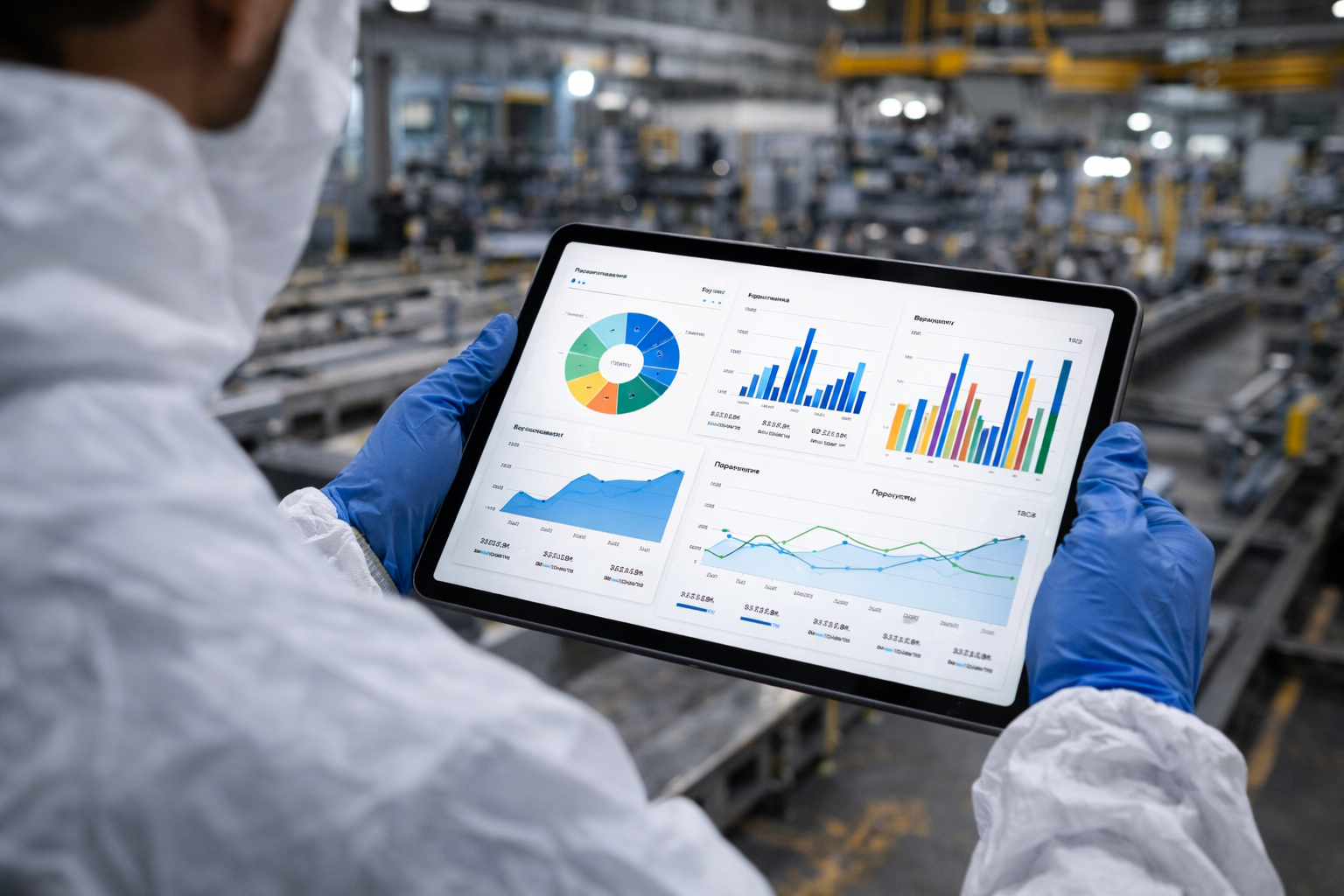
Modern production environments are becoming more complex every year. Equipment works in connected chains, process stability depends on multiple variables, and even small deviations can lead to downtime, product loss, or inefficient use of resources. In such conditions, monitoring is no longer an optional digital add-on. It becomes a practical management tool.
Industrial monitoring systems help manufacturers see what is happening on the production floor in real time. They make equipment states, process parameters, and resource consumption measurable and understandable. This visibility is especially important for companies that want to reduce losses, improve operational discipline, and create a reliable foundation for further digitalization.
Why Monitoring Is Critical For Modern Production
In many factories, problems are still identified too late. Operators may notice downtime after it has already affected output. Engineers may discover abnormal process behavior only after deviations have caused quality issues. Utility losses are often hidden in total monthly consumption rather than visible at the level of a specific line or operation.
Monitoring changes this situation by creating a continuous data layer across production. Instead of relying on assumptions, teams can work with actual signals from equipment, process indicators, and resource usage. This makes operations more transparent and helps companies move from reactive management to controlled, data-driven decision-making.
Types Of Industrial Monitoring Systems
Equipment And Machine Monitoring Systems
These systems track whether equipment is running, stopped, or idle. They create the basis for downtime analysis, performance tracking, and OEE calculation. In this area, QiVisor helps collect signals from PLCs and convert them into structured production data.
Process Monitoring Systems
Process monitoring focuses on temperature, pressure, flow, and other technological parameters that directly affect product quality. This type of monitoring is especially important in food, pharmaceutical, and chemical production.
Resource And Utility Monitoring Systems
These systems track electricity, water, steam, and compressed air. Their role is not only technical but also economic, because resource consumption directly influences production cost and overall efficiency.
Cleaning And CIP Monitoring Systems
In hygienically sensitive industries, monitoring cleaning processes is just as important as monitoring production itself. This includes cycle control, temperature tracking, chemical concentration, and timing of each stage.
Data Collection And Signal Analysis Systems
Before monitoring can deliver value, signals must be captured and interpreted correctly. This is where PLC Analyzer Pro and BlackBox become important, helping engineers validate signals, identify missing data, and debug communication problems.
How Monitoring Systems Work Together
In a real production environment, monitoring systems do not work as isolated tools. They form a connected infrastructure. Data is generated at the equipment level, captured through PLCs or dedicated devices, transmitted to a central environment, and then visualized for operational use.
A solution such as QiVisor Box acts as an intermediate layer between equipment and the digital environment. It helps collect and transfer data in a stable way, making it possible to combine machine monitoring, process monitoring, and resource tracking into a single picture.
Practical Example: Combining Monitoring Systems In One Production Environment
Consider a typical production line where several categories of data need to be tracked at the same time. At the equipment level, QiVisor helps monitor machine states and detect downtime. At the process level, parameters such as temperature and pressure are recorded to maintain product stability. At the utility level, energy and water consumption are measured to identify hidden losses.
If cleaning processes are critical, CIP monitoring adds another layer of control. At the same time, PLC Analyzer Pro and BlackBox can be used during setup or troubleshooting to ensure that the right signals are being collected and interpreted correctly.
Benefits And Common Mistakes Of Monitoring Implementation
Main Benefits
- Production becomes transparent at the level of real data, not assumptions
- Downtime can be measured, analyzed, and reduced systematically
- Utilities such as water and energy become controllable cost factors
- Monitoring creates the base for analytics, automation, and IIoT development
Common Mistakes
- Collecting signals without understanding which data is actually useful
- Implementing separate tools without integration into one system
- Using monitoring only for reporting instead of operational decisions
- Skipping signal validation during implementation and troubleshooting
Conclusion
Industrial monitoring systems provide the foundation for understanding and improving production. They help companies connect equipment data, process indicators, and resource consumption into one structured environment.
Solutions such as QiVisor, QiVisor Box, PLC Analyzer Pro, and BlackBox can be used not as isolated tools, but as parts of a broader monitoring architecture. This approach makes monitoring practical, scalable, and valuable for everyday operations.
For modern manufacturing companies, monitoring is not just a technical option. It is a necessary step toward stability, efficiency, and further digital transformation.
Discuss A Monitoring Solution For Your Production Site
Meta Systems Solutions Can Help You:
- Collect real-time data from equipment and PLCs
- Monitor downtime, process parameters, and utilities
- Validate production signals during implementation
- Build a scalable monitoring architecture for future digitalization
If your production team needs better visibility into operations, a monitoring system can become the starting point for efficiency improvement. The right architecture helps reduce blind spots, connect fragmented data, and support better decisions at the operational level.